
Where Education, AI & Intelligence Converge
Education is undergoing one of the most significant transformations in modern history. What began as digitization during the pandemic has now evolved into a structural redefinition of how learning is delivered, measured, and optimized.
The global EdTech market has grown from approximately $106B in 2020 to over $220B in 2024, and projections suggest it could cross $450B by 2030. This growth is not just about online classes — it represents a deeper shift toward adaptive learning, AI integration, and data-driven educational infrastructure.
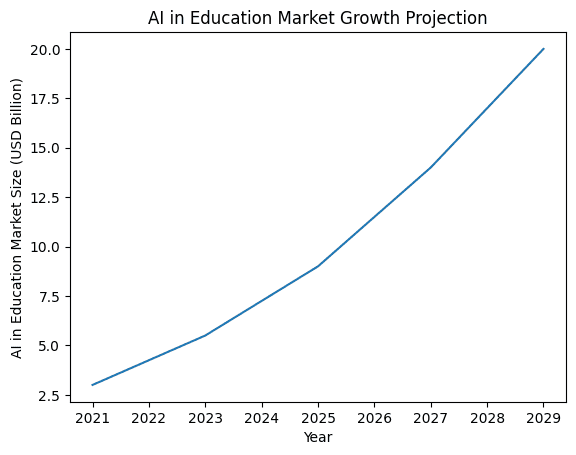
But the real acceleration lies within AI in Education, projected to grow from $3B in 2021 to nearly $20B by 2029. Institutions are increasingly adopting intelligent tutoring systems, predictive analytics, and personalized learning engines.
India: The Fastest Growing EdTech Landscape
India represents one of the most dynamic education markets globally.
Over 1.5 million engineering graduates annually
More than 40 million higher education students
EdTech market projected to grow from ~$2.8B in 2020 to $20B by 2030
India’s challenge is not access — it is quality and scalability.
Large classrooms, exam-driven systems, and limited personalized feedback create learning gaps, especially in STEM disciplines. Students often hesitate to ask doubts in class, and professors struggle to track conceptual understanding beyond grades.
The next evolution of Indian EdTech will not be content platforms — it will be Teaching Intelligence platforms.
Singapore: Precision Education & AI Adoption
Singapore represents a different but equally important model.
With strong government-backed digital transformation initiatives, universities and institutions are:
Investing heavily in AI-enhanced pedagogy
Building smart campuses
Integrating analytics into academic decision-making
Singapore’s approach is structured, research-backed, and focused on measurable outcomes. It serves as a testbed for scalable AI-driven academic infrastructure in Asia.
For companies building intelligent education systems, Singapore offers:
High digital maturity
Institutional readiness
Faster enterprise adoption cycles
The Shift: From Content Delivery to Learning Intelligence
The first wave of EdTech focused on:
Video lectures
LMS systems
Online test platforms
The second wave (current) focuses on:
Adaptive systems
AI tutors
Real-time analytics
Engagement measurement
But the third wave — now emerging — focuses on:
Making student thinking measurable.
This is where AI-powered Teaching Intelligence becomes critical.
The Real Opportunity
Globally, there are nearly 30 million STEM and higher-education students in digitally accessible institutions.
At even $600 annual ARPA, this represents a multi-billion-dollar opportunity.
But more importantly, it represents an opportunity to:
Reduce silent learning gaps
Empower professors with data
Improve academic engagement
Move from grading to insight
The DASCAIN Perspective
At DASCAIN, we believe the future of EdTech is not about replacing teachers.
It is about extending their intelligence.
Guide reasoning
Capture hesitation
Translate learning into insight
The next decade of education will be defined by systems that make learning visible.
And the institutions that adopt Teaching Intelligence infrastructure early will lead the transformation.